Neurosensory Assessment for Massage Therapist
ASMR, Orthopedic Play, and the Science of Perception
Boulder School of Massage Therapy
$300
50% of all proceeds will be donated to the Boulder School of Massage Therapy

Neurosensory Massage: ASMR, Orthopedic Play, and the Science of Perception is an 8-hour continuing education course for licensed massage therapists that moves through four integrated sections: spectrum self-placement, the neuroscience of perception, orthopedic assessment reframed as sensory dialogue, and ASMR massage as a clinical application of CT afferent science.
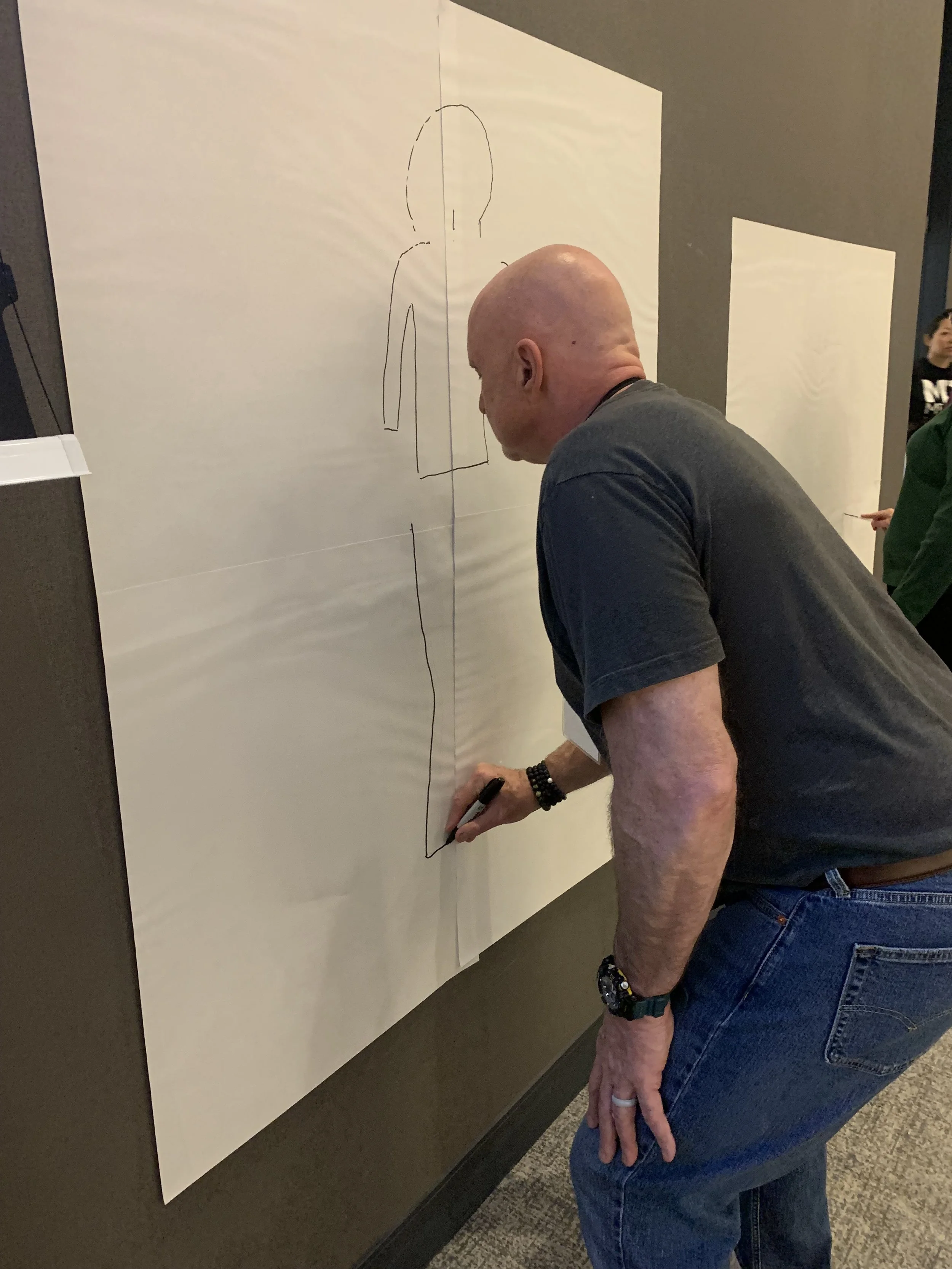
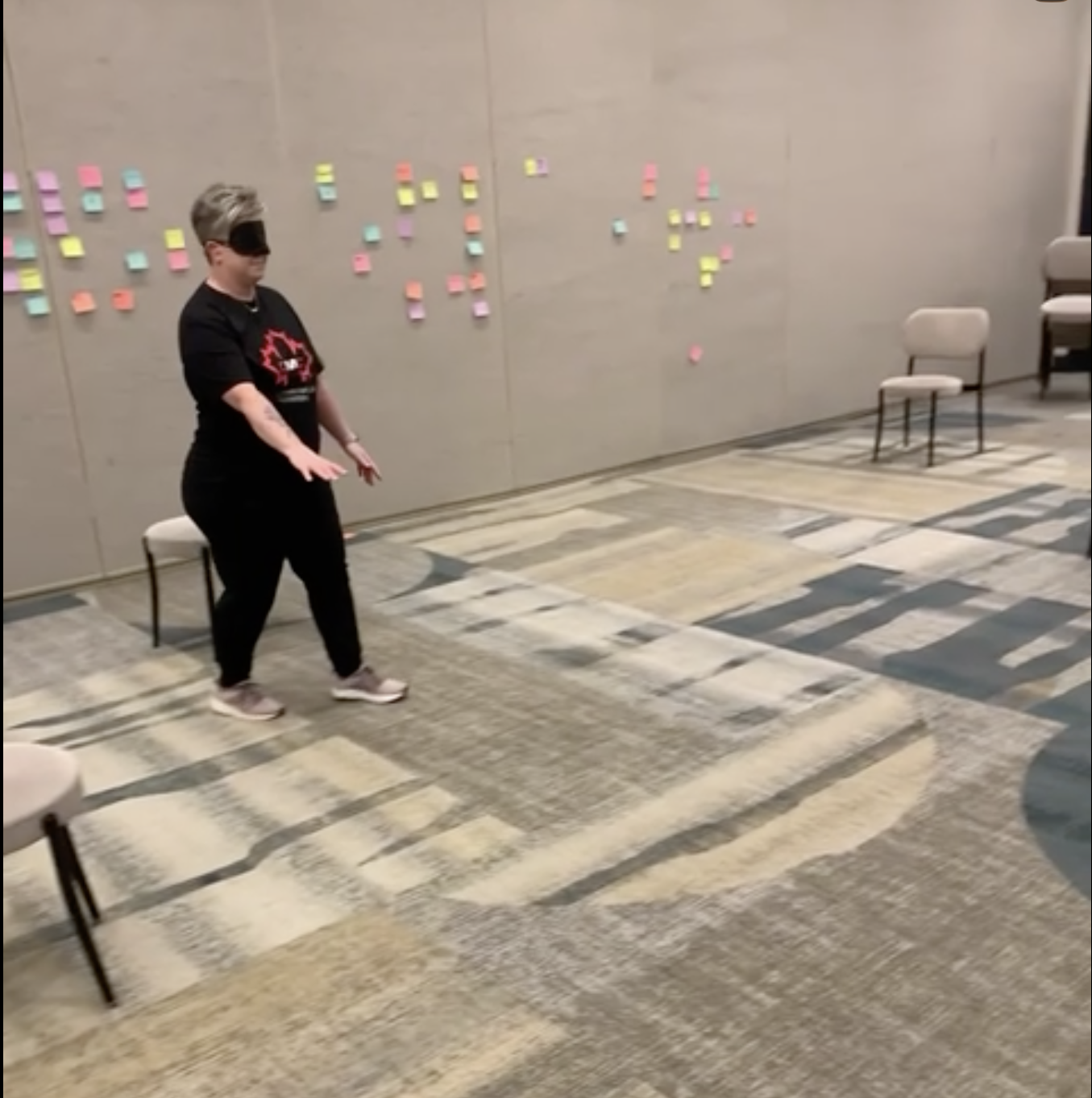
The course opens with a 45-minute Spectrum Placement Lab — three experiential games that place every student across seven sensory dimensions on a class wall map, built before any lecture begins. This map remains visible all day and is referenced at every section transition. It establishes the course's foundational premise not through argument but through direct personal experience: every person in the room falls somewhere on the sensory spectrum, and that position shapes everything — what they feel when they deliver a technique, what their clients feel when receiving it, and how precisely they can calibrate the gap between the two.
The Science of Perception section translates the morning's experience into neuroscience: CT afferents, cortical body mapping, interoceptive accuracy, thalamic gating, and the mechanism by which touch reaches the brain as an affective rather than merely a discriminative signal. Each concept is anchored with a short experiential activity that makes the principle felt rather than merely understood.
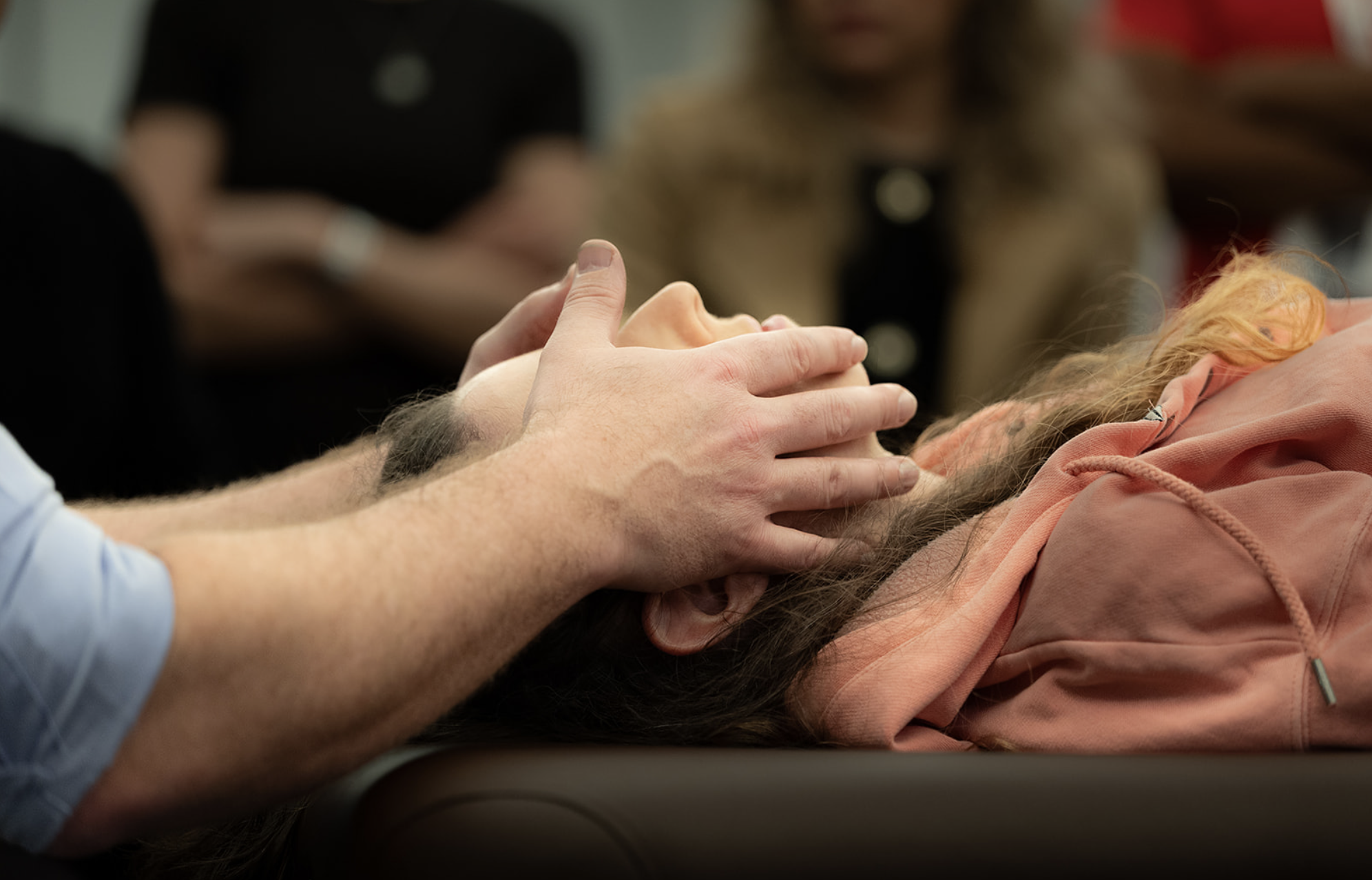
The Orthopedic Play section reframes muscle testing and passive range of motion as sensory feedback instruments rather than diagnostic pass/fail assessments. Through instructor demonstration followed by structured partner practice, students learn to read resistance quality, end-feel, and neurological guarding as real-time information about the client's nervous system state. Techniques include manual muscle testing delivered at reduced force as a sensory dialogue, slow-speed PROM as a nervous system interview, traction and compression contrast at mid-range, and oscillation grading from rhythmic rocking through progressive stillness. The orthopedic block closes at the exact neurological state — a client settled and listening — from which the ASMR section departs.
The ASMR Massage section applies all three prior sections to hands-on practice at the threshold of perception. The clinical framework layers CT afferent activation (working within the 1–10 cm/second, sub-2.5 N/cm² mechanical window for C-tactile fibers), parasympathetic induction through accumulated sub-threshold multi-sensory input, and real-time sensory threshold calibration using each partner's morning wall map data as a predictive starting point. Students discover that working at the edge of perception is technically more demanding than standard pressure work — because the target is moving and the recalibration is continuous. The day closes with a full integrated sequence moving from PROM through CT sweeps to the parasympathetic induction protocol, followed by wall map revisit and clinical application planning.
No prior neuroscience background is required. Active physical participation in all experiential and hands-on blocks is expected. Students with physical limitations should notify the instructor in advance.
LEARNING OBJECTIVES
Upon successful completion of this course, participants will be able to:
Domain 1 — The Sensory Spectrum & Science of Perception
Define proprioception, interoception, vestibular processing, cortical body mapping, and CT afferent function as distinct neurological systems, each distributed along a continuous spectrum across the human population.
Articulate the neuroscientific basis for the position that all human nervous systems fall on a sensory spectrum, and explain how this reframe changes clinical approach for every client — not only those with identified neurodevelopmental conditions.
Explain the role and mechanical parameters of CT (C-tactile) afferents in affective touch processing, including optimal velocity range (1–10 cm/second) and contact force (sub-2.5 N/cm²), and describe how CT afferent density varies across individuals as a spectrum variable.
Describe thalamic gating and its role in determining how much sensory signal reaches cortical awareness, and explain how individual variation in thalamic gain produces different auditory and visual sensitivity positions on the spectrum.
Explain cortical smudging in chronic pain, including its effect on two-point discrimination and body schema accuracy, and describe how targeted tactile input — including massage — can restore cortical map resolution.
Identify the three primary inputs to balance and explain what occurs when each is isolated or removed, framing vestibular threshold as a spectrally distributed, neurologically determined trait.
Domain 2 — Spectrum Placement & Self-Assessment
Administer and score the three-game Spectrum Placement Lab, placing each participant across seven sensory dimensions on the class wall map.
Interpret a spectrum placement profile to generate clinical hypotheses about touch preferences, environmental design needs, and appropriate starting parameters for both orthopedic assessment and ASMR massage delivery.
Use wall map data collected during the Spectrum Placement Lab as predictive input for session design, and articulate the mechanism by which each dimension affects specific clinical decisions.
Demonstrate the Green/Yellow/Red body mapping tool as a spectrum-compatible intake and session-close assessment appropriate for clients across the full range of interoceptive and communicative ability.
Domain 3 — Orthopedic Play: Assessment as Sensory Dialogue
Reframe manual muscle testing and PROM as sensory feedback instruments — tools that reveal the client's neurological state rather than merely measuring mechanical output — and demonstrate this reframe in hands-on partner practice.
Perform manual muscle testing at reduced force levels (approximately 50% of standard) while narrating the qualitative sensory information received at each increment, distinguishing between springy, firm, empty, irregular, and guarding-type resistance.
Perform slow-speed PROM at approximately one-third standard velocity and identify the four key nervous system responses to monitor during movement: first resistance barrier location and quality, respiratory change point, segmental recruitment onset, and tissue response to the pause technique.
Apply axial traction and axial compression contrast at mid-range during PROM and interpret the differential tissue response as information about the client's proprioceptive loading preference and spectrum position.
Demonstrate oscillation grading from confident rhythmic rocking (approximately 1 cycle/second) through progressive deceleration to supported stillness, and describe the neurological mechanism by which this sequence prepares the client for sub-threshold touch work.
Explain how the therapist's own spectrum position on the proprioceptive sensitivity axis shapes what they perceive during orthopedic assessment, and identify at least two ways to compensate for their personal sensory starting point when evaluating clients at different spectrum positions.
Domain 4 — ASMR Massage: Working at the Threshold of Perception
Define ASMR as a clinical application of CT afferent science and describe the three layered frameworks used in this course: CT afferent activation, parasympathetic induction through micro-stimulation, and real-time sensory threshold calibration.
Deliver CT afferent sweeps within the mechanical parameters required for CT fiber activation (velocity 1–10 cm/second, contact weight equivalent to 2–3 fingerpads laid flat), and demonstrate the ability to hold this parameter range continuously for a minimum of 5 minutes.
Execute the four-layer Parasympathetic Induction Sequence — prosodic voice (Layer 1), CT scalp and neck touch (Layer 2), breath coupling (Layer 3), and stillness hold (Layer 4) — and explain the distinct neurological pathway targeted by each layer.
Use a partner's wall map Pressure axis placement to generate a pre-session hypothesis about starting CT touch intensity and auditory input level, then test and refine that hypothesis in real time during threshold-finding practice.
Describe the sensory gating shift mechanism — by which CT afferent input progressively lowers the client's sensory threshold during a session — and explain why ASMR-range massage becomes more effective over session duration rather than habituating.
Deliver the Full Arc sequence (PROM Interview → oscillation grading → CT transition → parasympathetic induction → threshold work → close) as a continuous 25-minute hands-on session, maintaining calibration across the transition between orthopedic and ASMR touch modalities.
Articulate the technical demands of threshold work — the continuous recalibration required to follow a moving sensory edge — and contrast this with the demands of standard pressure massage work.
Domain 5 — Clinical Application: Spectrum-Informed Practice
Conduct a structured sensory preference intake that captures clinically relevant information across at least three spectrum dimensions (touch pressure, auditory sensitivity, interoceptive accuracy) in under 5 minutes.
Design a spectrum-calibrated session plan for a given client profile, specifying starting parameters for touch intensity, environmental sound level, pace of movement, and communication style based on their placement across relevant wall map dimensions.
Explain the reframe at the center of this course — that spectrum-informed practice is not a specialization for a particular client population, but the technical foundation of individualized, evidence-informed care for every client — to a colleague in accessible, non-clinical language.