Most continuing education either teaches you a new technique or tells you the technique you already use is backed by science you've never actually seen. This class does neither. It takes the systems that already explain why your hands work — the sensory system, pain science, memory and learning, biotensegrity, prediction — and asks a harder question of each one: what do we actually know, what do we assume, and where has the profession kept repeating something past the point where the evidence supports it?
You'll leave with sharper palpation skills, a working vocabulary for explaining your treatment decisions to clients and referring providers, and a clear sense of which claims in your training you can stand behind and which ones you should quietly retire.
How the class is built
The class is built around the nine systems that I theorize help explain touch therapy, all on one map. Sensory input, pain, prediction, memory, biotensegrity, behavioral neuroscience, PNE (pain neuroscience education), ASMR, and the physiological response — treated as one connected system rather than nine separate lectures. You'll come back to the same map throughout the two days as each piece gets added to it. We will link these nine systems together because it is impossible to separate them from one another and to explain the human system in isolation is a failing on our part.
What's inside
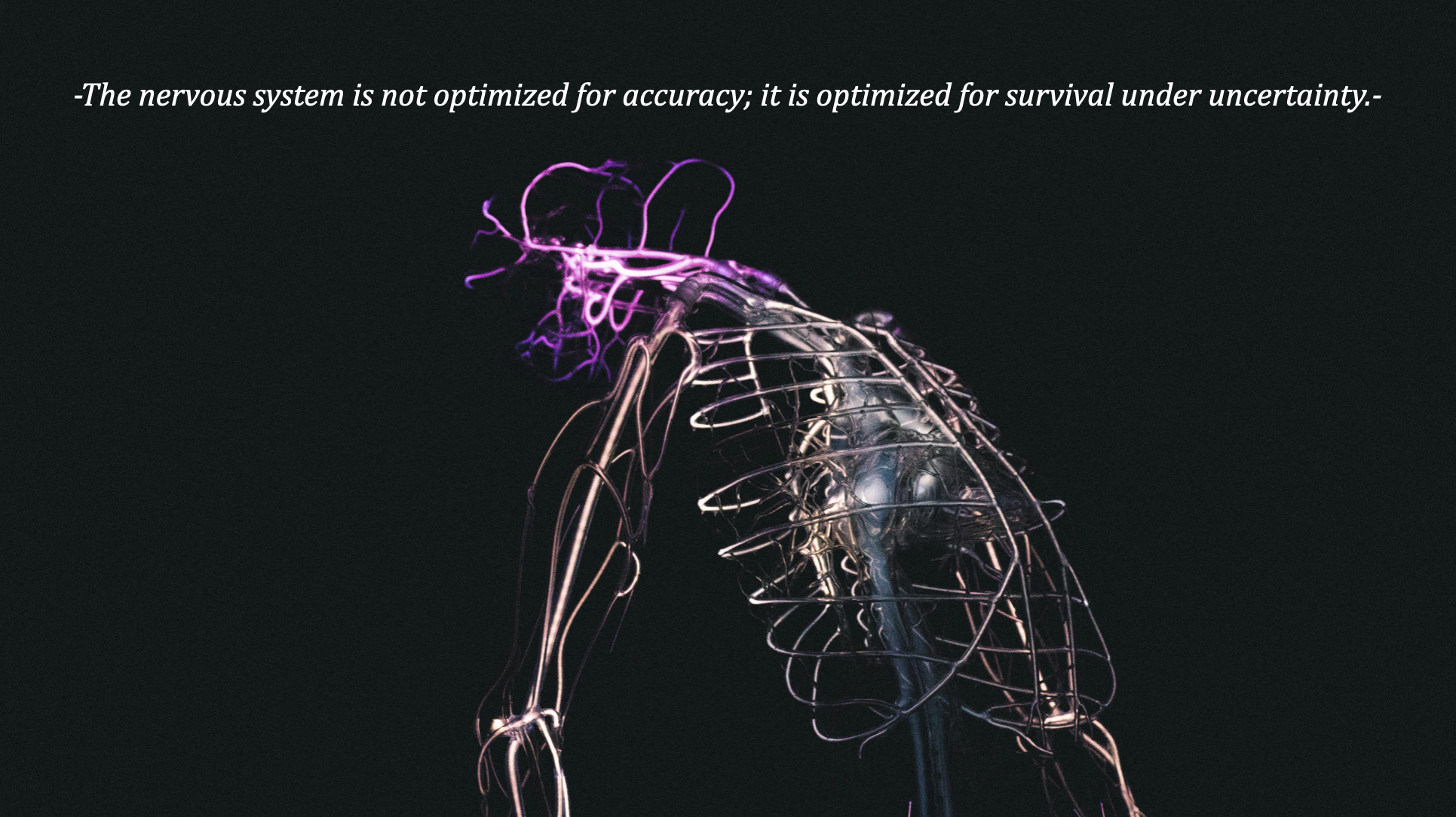
The sensory system, properly mapped. Not just touch — sight, smell, taste, hearing, proprioception, vestibular sense, and interoception, and how each one shapes what a client feels on your table before you've done anything.
Mechanoreceptors and pressure, with numbers. What 3–10 grams of pressure actually palpates versus 250–400 grams, tied to a real pressure scale, not "light, medium, deep" left undefined.
Fascia and biotensegrity — the corrective version. Where the evidence for fascial manipulation actually stands: what MFR-under-anesthesia studies found, what it actually takes to permanently deform collagen (and why your hands, unaided, mostly can't), and why "tension = integrity" is a real principle being asked to carry more weight than it can hold in the popular version of biotensegrity.
Pain neuroscience education (PNE). 4 core pain facts, pain catastrophizing, fear-avoidance, and the research linking emotional state to whether acute pain becomes chronic — with an 85% predictive accuracy figure from real neuroimaging data.
Memory, learning, and neuroplasticity. Synaptic plasticity in plain terms, self-observation as a clinical tool, and why "ritual of behavior" and "need for behavior" are not the same thing.
ASMR as a legitimate clinical topic. The triggers, the physiological response, and how to structure touch to make it more available to a client — without oversell.
Hands-on labs throughout, not tacked onto the end: a sponge lab for palpating fluid dynamics, a graded pressure lab, sympathetic/para-sympathetic stroke-direction testing, and an assessment lab plus many more.
What this class won't do
It won't tell you that massage releases toxins, that you can permanently reshape someone's fascia with your thumbs, or that a 30-minute massage reliably spikes endorphins — the class walks through why each of those claims doesn't hold up, and how to debunk and talk about massage accurately. If your practice currently rests on language like that, expect some of it to get challenged, not confirmed.
Who it's for
This class is designed for all licensed massage and manual therapists at any experience level. No previous training beyond baseline education is required - the class translates the science into clinical language as it goes, language that you and your clients can understand.
Learning Outcomes
• Understanding Touch and Pain — explore the research behind how touch and pain interact with our brain and musculoskeletal system, both separately and in conjunction.
• Historical Foundations of Manual Therapy — investigate the history of manual therapy and its foundations, to identify and challenge misinformation within the profession.
• Integration of Neuroplasticity — examine how to integrate neuroplasticity into practice, and how language, palpation skills, and observational feedback impact clients.
• Palpation Skills Development — through practical labs completed at home, introduce measurable skills related to palpation practice.
IN-PERSON
16 hours (10 hrs lab time), NCBTMB approved continuing education class (NY Sponsorship approved and CE Broker approved)
Open to all healthcare practitioners licensed in Manual/Massage Therapy
Course ID(s): CE4021885
Interested in hosting a class or having me come teach at your school or for your association? Please contact me here: email