Touch therapy has moved a long way in twenty years. The phrases manual therapists use in session haven't always moved with it. This class is built on a simple, uncomfortable fact: a sentence said once, in passing, during a session can become a belief a client carries for years. Darlow and colleagues documented exactly that — offhand clinician comments, sometimes delivered years earlier, still shaping how people understood and managed their back pain long after the appointment ended.
This isn't about how you were trained. It's about what the science has taught us since. The biomedical model wasn't careless — it was the best available understanding, and it produced a generation of therapists who learned to explain what they felt in confident, structural terms because that was what good clinical communication was believed to be. This class treats every phrase it examines as reasonable under the old model, and offers the update rather than the correction.
Why a whole class about wording
The structural explanations we reach for turn out to describe a lot of people who feel completely fine. Imaging findings like disc degeneration, disc bulge, and disc height loss show up in the large majority of pain-free adults by their sixties (Brinjikji et al., 2015). That doesn't make structure meaningless. It makes it a much weaker single explanation than most of our training implied — and yet "your disc is degenerating" or "that's scar tissue" still gets said as if it were a settled fact your hands confirmed, rather than a guess dressed in diagnostic language.
That gap is where the nocebo effect lives: a measurable, documented worsening of outcomes driven by negative expectation, with clinicians among its most common sources (Colloca & Finniss, 2012). Diagnostic-sounding language is one of the more reliable ways to trigger it — precisely because it sounds authoritative, and clients treat authority as information.
What you'll say differently
Four examples, out of the working set the class builds together:
Commonly saidUpdated"Your shoulder is out of alignment.""I'm feeling some restriction in this shoulder — does this feel familiar, or is this new?""That's a lot of scar tissue built up.""This area feels denser than the surrounding tissue — any injury or surgery here before?""You're carrying all your stress right here.""There's a lot of tension through your upper traps today — how's your week been?""This knot is from bad posture.""I'm feeling a tight band of tissue here — I'll spend some extra time on it."
The pattern underneath all four: describe what your hands actually found, don't assert why it's there. Palpation can tell you density. It cannot confirm scar tissue, alignment, or the cause of tension — and saying it can is doing more than being friendly, it's making a diagnostic claim outside your scope, in language that lands with more weight than "friendly" was ever meant to carry.
The four hours
The science update — the shift from the biomedical to the biopsychosocial model, and what the nocebo effect actually is.
From diagnosis to description — the sensation-versus-cause test, and why diagnostic-sounding language lands so hard. The group rewrites its own collected phrases together.
How language shapes outcomes — the fear-avoidance model, traced through a real case from one sentence to a worse outcome.
The practicum — a live reframing drill, the discomfort-versus-sharp-pain intake distinction, and a written language plan you leave with.
From the book
If you've read Pain! The Other 4 Letter Word, this class is where Chapter 20 — on what effective pain education actually contains — gets put into your own mouth instead of staying on the page. You don't need to have read it to take the class; the two aren't sequential. But if you have, expect the second half of the day to feel like practice, not introduction.
Who it's for
Any practitioner who talks to clients about what they're feeling during a session — massage therapists, bodyworkers, manual therapists — at any point in their career. No prior pain-science coursework assumed, and no change to your hands-on technique required.
Learning Outcomes
Students will be able to identify the point at which common clinical language shifts from describing a sensation to asserting an unsupported diagnostic cause.
Students will be able to explain the ethical responsibility massage therapists and bodyworkers hold for the words they use with clients, including how casual, off-handed language can unintentionally cross professional scope boundaries.
Students will be able to apply a practical decision framework to their own commonly used phrases, evaluating each for diagnostic risk before it's spoken in session.
Students will be able to demonstrate at least three scope-appropriate reframes of common diagnostic-sounding phrases, ready to use immediately with no change to hands-on technique.
IN-PERSON
4-hour NCBTMB approved continuing education class (NY Sponsorship approved and CE Broker approved)
Open to all healthcare practitioners licensed in Manual/Massage Therapy
Course ID(s): TBD
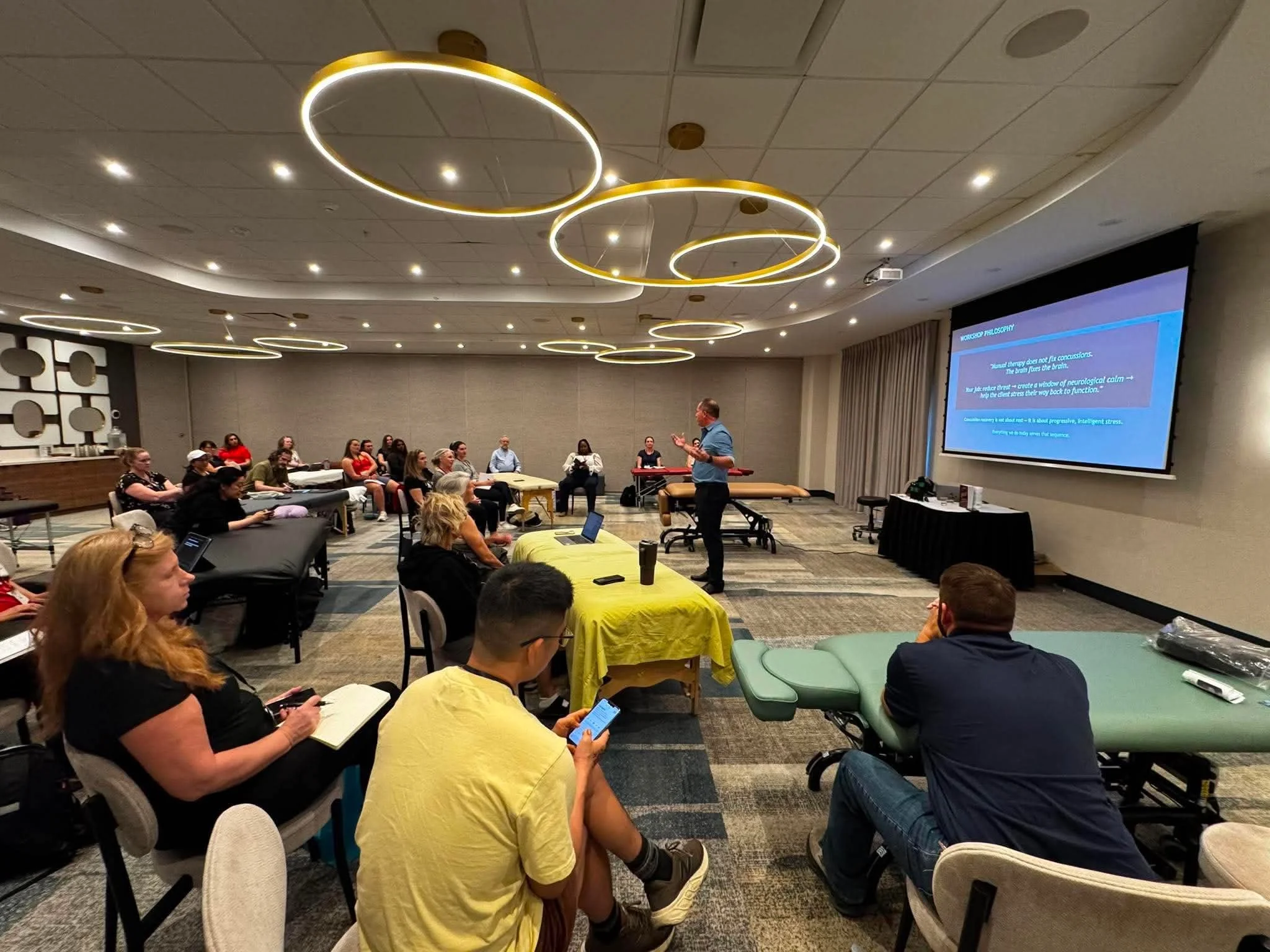
Interested in hosting a class or having me come teach at your school or for your association? Please contact me here: email